Commercial panel upgrades solve capacity, reliability, and compliance problems that directly affect how a business operates. This service is for facilities that have outgrown their original electrical infrastructure and need a system that can safely support current demand and future operational changes.
Many commercial properties don’t fail suddenly. They slow down. Equipment trips intermittently. New machinery can’t be added without issues. HVAC systems behave inconsistently during peak hours. Inspections start raising questions that never came up before.
In these situations, the electrical panel is often the bottleneck. It becomes the silent limiter that prevents growth, disrupts operations, or creates safety exposure. Commercial panel upgrades exist to remove that constraint and restore control over how power is distributed and managed across the facility.
Commercial Panel Upgrades are not about swapping old equipment for new. They require understanding how power flows through the entire building, how loads interact, and how operations change throughout the day.
Mistakes at this level are expensive. Oversizing without load analysis wastes money. Undersizing forces another upgrade sooner than expected. Ignoring downstream circuits or feeder limitations shifts the problem instead of fixing it. Proper planning ensures the upgrade actually supports the business instead of creating new points of failure.
Home Electrical Services LLC approaches this service with an evaluation-first mindset. The process starts by understanding how the business operates, what has changed over time, and what the electrical system is expected to support moving forward.
On-site evaluation focuses on real load behavior, not assumptions. Equipment demand, startup loads, and safety margins are reviewed together. Recommendations are explained clearly, including why certain options make sense and others don’t. Once approved, work is coordinated to reduce disruption, and performance is verified under normal operating conditions before the project is considered complete.
A panel upgrade decision is never isolated. Existing service capacity, feeder condition, downstream distribution, and equipment demand all influence whether an upgrade will be successful.
Future plans matter just as much as current usage. Expansion, tenant changes, or HVAC upgrades can quickly consume unused capacity if they aren’t considered early. Evaluating these factors together helps prevent installing a panel that looks adequate today but becomes a limitation tomorrow.
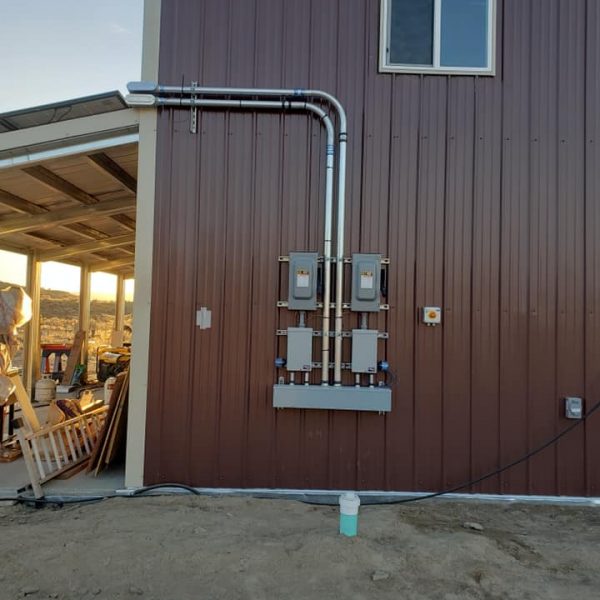
One common misconception is that panel size alone solves capacity problems. Another is assuming inspections only care about code compliance, not performance under real load.
Businesses also underestimate how interconnected systems are. Treating lighting, machinery, and HVAC as separate electrical problems often leads to repeat issues. A holistic evaluation prevents partial fixes that cost more over time.
Commercial panel upgrades succeed or fail based on details that are often overlooked. The following factors consistently determine whether the result actually supports business operations:
Real-world demand often differs from nameplate ratings. Measuring how power is used throughout the day prevents incorrect sizing.
Motors and HVAC equipment draw higher power at startup, which can stress panels if not accounted for properly.
Panels distribute power, but circuits determine how safely and efficiently that power is use
Adding equipment later without capacity planning leads to repeat upgrades and unnecessary downtime.
Scheduling and sequencing must match how the business operates to avoid unexpected interruptions.
Systems should operate comfortably below their limits to reduce failure risk and extend equipment life.
A properly planned panel upgrade stabilizes electrical delivery across the building. Equipment runs more predictably. Expansion decisions become easier. Safety risks tied to overloaded systems are reduced.
Instead of reacting to outages or inspection issues, businesses regain control over electrical capacity. This allows operations to grow with fewer surprises and less unplanned downtime, supporting both short-term reliability and long-term planning.
Where Home Electrical Services LLC Performs Commercial Panel Upgrades includes Moses Lake as the home base, with service extended to Spokane, Wenatchee, Ephrata, and broader Central Washington. This work is handled by the same H.E.S. team, with scheduling and logistics discussed upfront to match operational needs.
Schedule Service With Licensed Electricians
In many cases, yes. Downtime requirements depend on system layout and scope. Planning allows work to be scheduled around operations when possible, while clearly identifying any unavoidable shutdown periods before work begins.
Capacity is determined by evaluating measured demand, equipment behavior, and future plans rather than square footage alone. This approach helps avoid oversizing, undersizing, and repeat upgrades caused by incomplete load analysis.
Not always, but circuits are evaluated as part of the process. If downstream wiring or protection limits performance or safety, those issues are addressed to ensure the upgraded panel functions correctly.
Timelines vary based on complexity, coordination, and access. Some upgrades are completed in a single day, while others require phased work. Scope, timing, and expectations are defined before any work starts.
Only if the root cause is addressed. Breaker trips can result from load imbalance, equipment issues, or wiring problems. Panel upgrades are planned to correct underlying causes, not simply reset symptoms.
Plan Commercial Panel Upgrades With H.E.S. when electrical capacity or reliability is limiting operations. Home Electrical Services LLC provides clear evaluation, practical recommendations, and coordinated execution so upgrades support how the business actually operates.
Emergency electrical concerns are handled promptly. Planned upgrades are scheduled with scope and expectations defined upfront, ensuring no surprises once work begins.