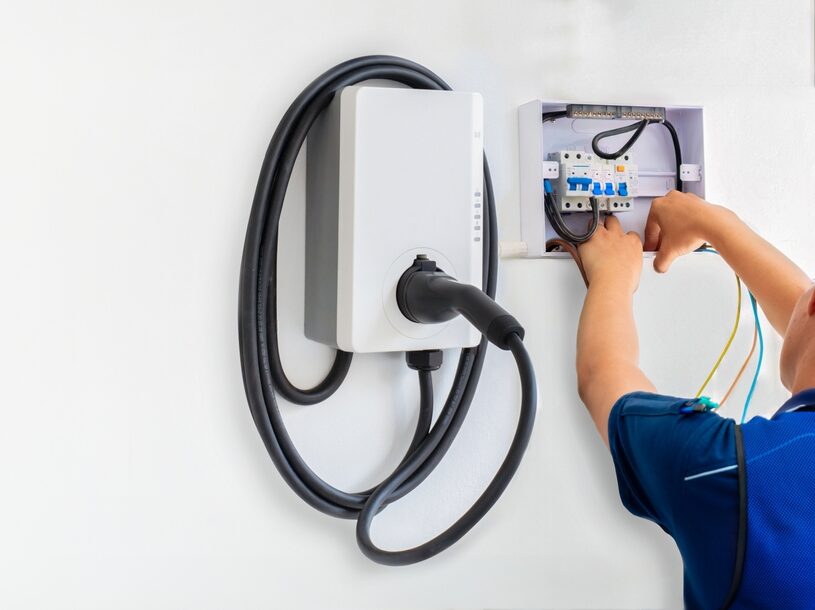
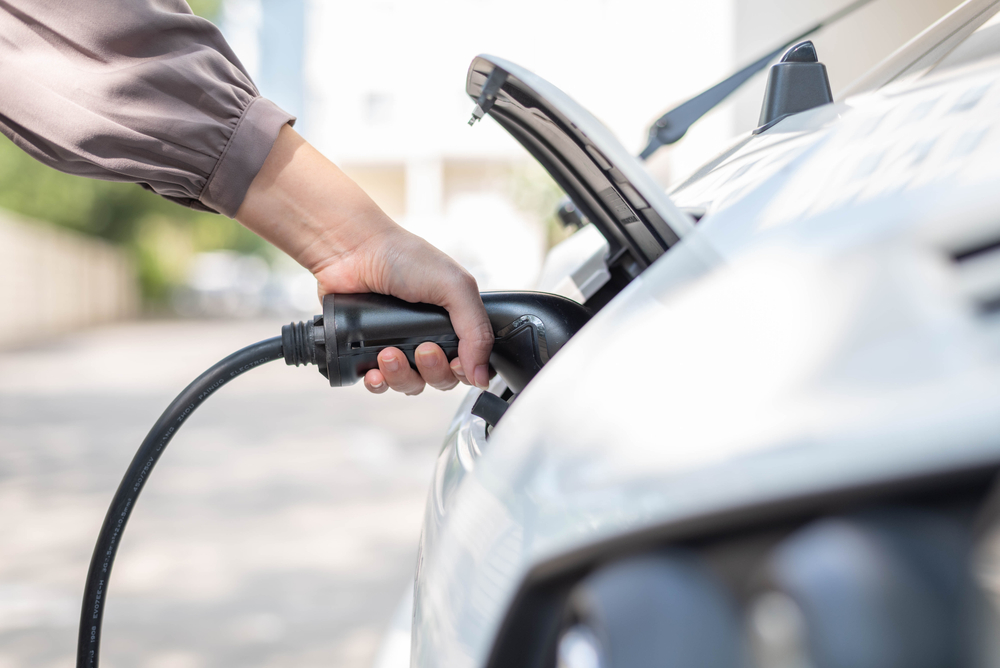
EV ownership changes how your electrical system gets used. A standard outlet can take all night and still fall short. An EV charger adds speed, consistency, and control, but only if the circuit, panel capacity, and protection are designed for the real load.
Charging is not a “plug it in and hope” situation. Level 2 chargers operate for hours at a time, often at the highest continuous load a home will run. That sustained demand is exactly where weak connections, undersized wiring, and borderline panel capacity show up.
EV charger installation exists to make charging reliable, safe, and predictable, not just possible.
Many EV chargers look simple on the wall. The complexity is behind it.
A correct installation accounts for continuous-load rules, breaker sizing, conductor sizing, voltage drop, and where the charger sits within the rest of the home’s demand. If those details are ignored, you can end up with nuisance trips, heat at connections, premature equipment wear, or a panel that is pushed beyond what it can reliably support.
The goal is to create a charging circuit that behaves like it belongs there, because it does.
Home Electrical Services LLC approaches EV charger installation with the same mindset as any critical electrical load: verify capacity first, then build the circuit to match the demand.
The process starts with a practical assessment of your existing electrical system and charging goals. From there, the charger location, route, and protection are planned based on how the home actually uses power day to day. Once installed, the charger is tested under real charging conditions to confirm stable performance, not just a powered-on device.
EV charger installs are only as reliable as the system supporting them. Key considerations typically include:
Panel capacity and available breaker space
Existing load behavior (HVAC, water heaters, ranges, shops, outbuildings)
Continuous-load circuit design (correct breaker and wire sizing)
Route planning (attic, crawlspace, garage, exterior walls)
Charger placement and cable management
Weather exposure considerations for exterior installs
Permitting and inspection expectations when required
Homes often have layers of changes over time. EV charging adds a major new load, so the electrical system needs to be understood as a whole, not as isolated parts.
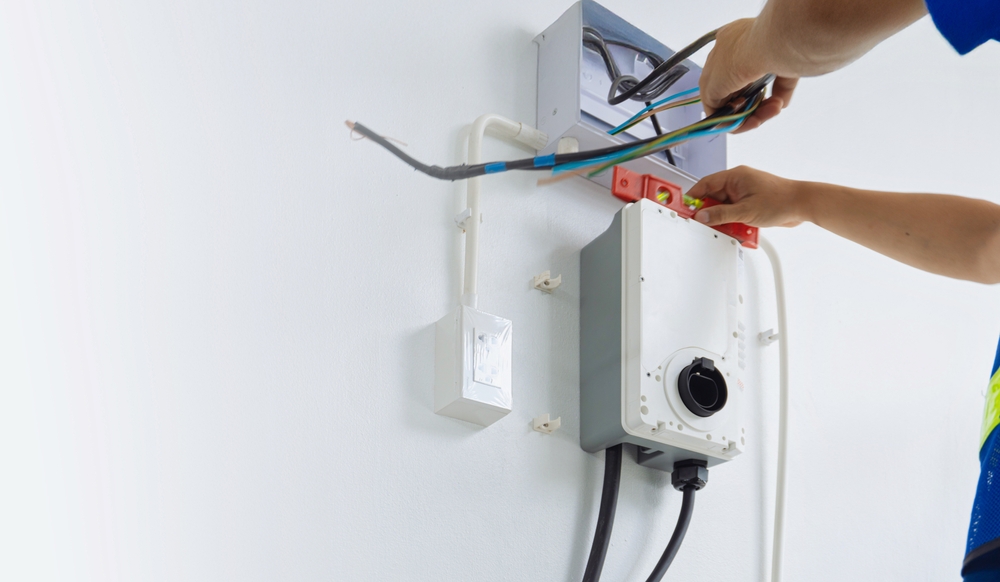
A charger can power on even when the install is marginal. That is what makes poor installs risky.
Common shortcuts include undersized wiring, incorrect breaker selection, loose terminations, or assuming panel capacity without confirming real demand. Those decisions don’t always fail immediately. They fail under heat, time, and repeated charging cycles.
A correct installation prevents repeat service calls, nuisance trips, and damage that builds quietly in the background.
EV charging issues tend to follow recognizable patterns:
A correctly installed charger makes charging consistent. You plug in, walk away, and the system behaves the same every time.
You also gain confidence that the charger isn’t stressing your panel, overheating conductors, or competing unpredictably with other household loads. The result is a cleaner electrical setup, fewer interruptions, and charging that matches how you actually use your vehicle.
Home Electrical Services LLC installs EV chargers in Moses Lake as the base of operations, with service provided in Spokane, Wenatchee, Ephrata, and throughout Central Washington. The same H.E.S. team handles evaluation and installation, ensuring consistency from planning through final testing.
Schedule Service With Licensed Electricians
Not always. It depends on existing panel capacity, available breaker space, and how your home’s current loads behave. A proper evaluation determines whether a standard install is appropriate or if upgrades are needed.
Yes. Level 2 charging typically runs for hours, which requires the circuit to be designed using continuous-load rules for breaker and conductor sizing.
Yes. Location depends on your layout, charging habits, and exposure conditions. Outdoor installs require extra attention to weather protection and routing.
Intermittent trips are usually caused by incorrect breaker sizing, loose connections, voltage drop, or a circuit that is competing with other loads. Troubleshooting focuses on load behavior, not guesswork.
The circuit is tested under real charging conditions, not just energized. Connections, protection, and performance are verified so the system remains stable over time.
Get reliable charging without guesswork by installing an EV charger the right way the first time. Home Electrical Services LLC designs and installs charging circuits for long-term stability, so you can charge confidently without stressing your electrical system.